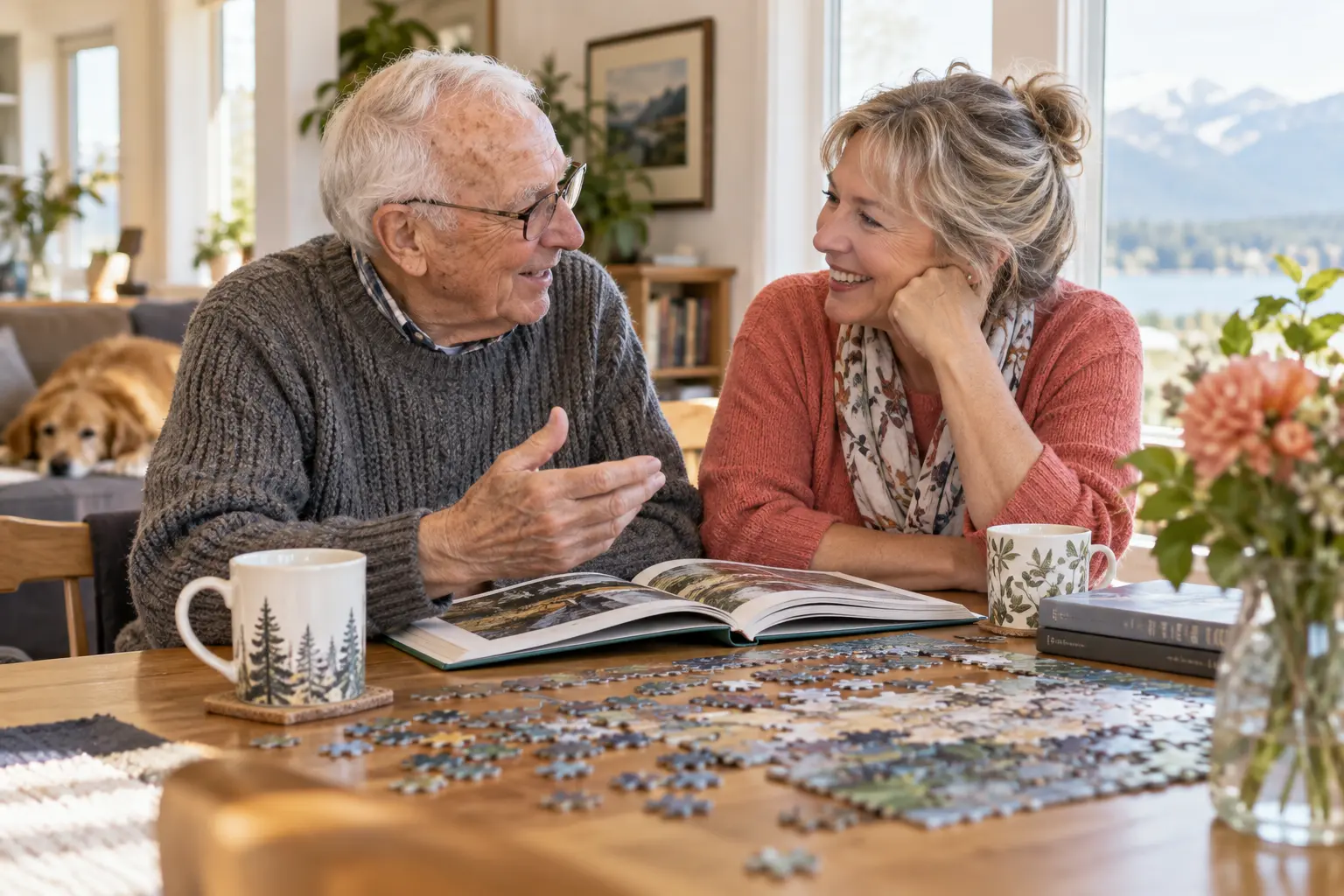

Healthy aging includes relationships
When people picture healthy aging, they often think about meals, movement, medication and medical appointments. Those things matter, but they are not the whole picture. People also need to feel known, included and connected. A trusted person who asks how the week has been, remembers a favourite story or shares a familiar activity can add something that no checklist can replace: a sense of belonging.
Social connection is the broad network of relationships and interactions in a person’s life. Loneliness is the painful feeling that the connection we want is missing, while social isolation describes having relatively few contacts or interactions. They can overlap, but they are not identical. Someone may live alone and feel contentedly connected, or be surrounded by people and still feel lonely. The quality of connection matters as much as the number of contacts.
A steady relationship can make everyday life easier
Supportive relationships can give people a safe place to talk through frustrations, celebrate small wins and put difficult moments into perspective. A companion does not need to solve every problem. Listening carefully, responding with warmth and returning when promised can reduce the feeling that everything must be carried alone.
Connection can also reinforce healthy routines. A planned visit may create a reason to get dressed, make tea, take a short walk or return to a favourite hobby. A conversation can surface a concern that the person then chooses to share with family or a health professional. These effects are not guaranteed, and companionship is not treatment, but relationships can make supportive habits feel more natural and enjoyable.
The best connection is personal
There is no universal activity that makes someone feel connected. One person may love a lively conversation about current events. Another may prefer quiet company while gardening, looking through photographs or watching a familiar program. Culture, language, humour, faith, mobility, energy and personality all shape what comfortable companionship looks like.
That is why a thoughtful match matters. Shared interests can open the door, but pace and temperament often determine whether the relationship feels easy. A good companion notices whether the other person wants to lead the conversation, needs more time to respond or would rather do something side by side. Respect is the foundation; the activity is simply the setting.
Small, reliable moments add up
Connection does not have to be dramatic. A weekly call, a regular cup of coffee or a walk around the block can become an anchor in the calendar. Reliability matters because it allows trust to grow. Over time, recurring contact creates shared references, running jokes and the comfort of not having to begin again with a stranger at every visit.
Families can support the relationship without controlling it. They might help identify interests, join an initial introduction or discuss accessibility, while still allowing the older adult to express preferences and build an independent connection. The goal is not to replace family or long-standing friends. It is to widen the circle of people with whom life can be shared.
- Start with an activity the person already enjoys.
- Choose a frequency that feels dependable but not overwhelming.
- Ask what a good visit would feel like, rather than assuming.
- Revisit the match as interests, energy or circumstances change.
Connection is a human need, not a personal failure
Wanting more company is not a sign that someone is needy or that a family has failed. Lives change. Friends move, partners die, driving becomes harder, retirement reshapes routines and health can limit familiar activities. Naming the need for connection is a practical act of self-knowledge.
Healthy aging looks different for every person, but meaningful relationships deserve a place in the plan. A well-matched companion can bring curiosity, consistency and another reason to enjoy the week—one ordinary, valuable moment at a time.
The central ideaHealthy aging is not only about managing health; it is also about preserving belonging, choice and relationships that make everyday life meaningful.
Sources and further reading
We favour official, public-health and first-party resources. Links open the original source so you can read the guidance in context.
Please note: Helping Companions provides social companionship—not medical, mental-health, nursing, transportation or personal-care services. Companions do not provide medication support or medical monitoring. If a medical problem or suspected medical emergency arises during a visit, call 911 (or the local emergency number) immediately and follow the dispatcher’s instructions.