History becomes human in a personal story
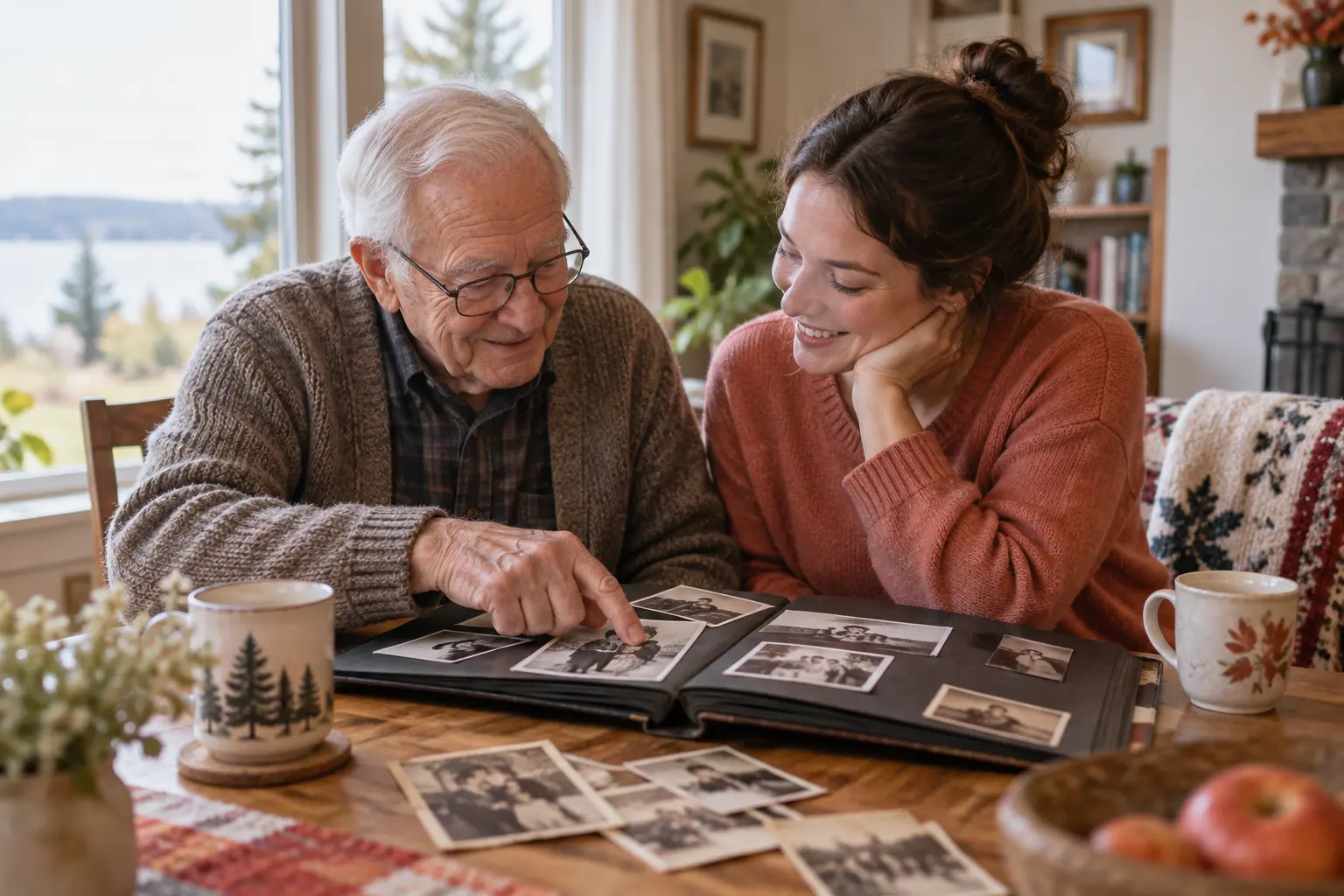
A person who lived through a period remembers more than headlines. They remember the cost of a bus ticket, the music at a dance, the first day at a job and how a family decision was made. Those details give texture to the past and remind us that major events were lived one ordinary day at a time.
Listening across generations can broaden a companion’s understanding of resilience, community and change. It can also reveal continuity: worries about belonging, love, work and family are not confined to one age group, even when the surrounding technology and customs differ.
Ask invitations, not interview questions
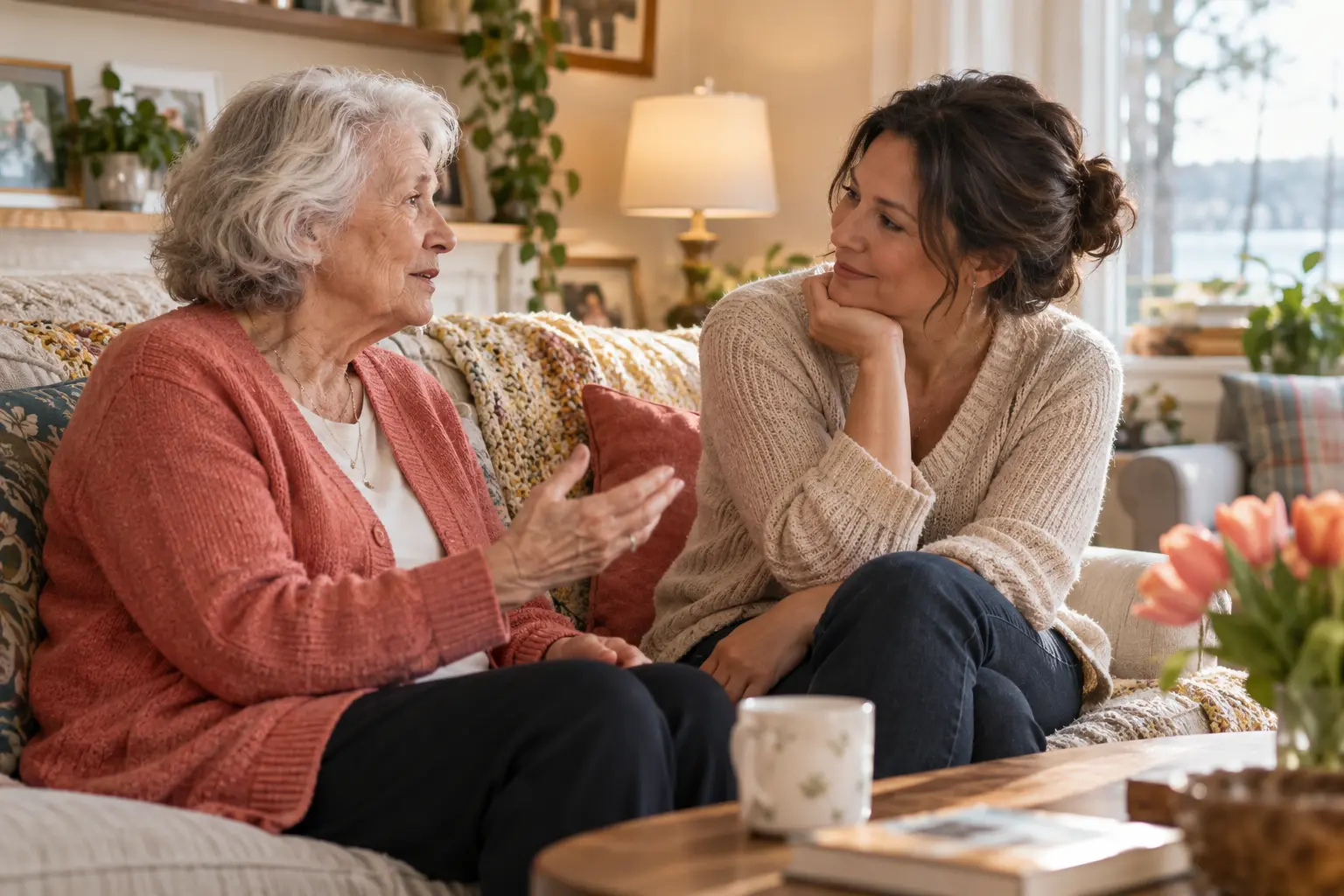
The best stories usually emerge from genuine conversation. A rigid list of questions can make someone feel studied. Open invitations are gentler: “What was that neighbourhood like?” “Who taught you to cook that?” or “What music did you love?” Following the detail that brings energy to the person’s voice is more important than completing a topic.
Not every memory is available for sharing. War, discrimination, loss, family conflict and illness may sit beside happier stories. If someone changes the subject or becomes uncomfortable, respect the boundary. Curiosity never creates an entitlement to personal history.
Older adults are not all alike
Age does not produce one worldview. People of the same generation differ in culture, race, language, faith, sexuality, politics, education and temperament. A companion should meet the individual rather than searching for a representative of “their time.”
Stereotypes can sound positive and still be limiting. Calling every older person wise, sweet or inspiring can flatten them. Some stories are contradictory, some opinions may be difficult and some afternoons have nothing profound to offer. Equality includes the freedom to be ordinary.
The deepest lesson may be attention
What companions learn is not only information about the past. They learn how a person made decisions, maintained relationships and adapted when plans changed. They may also learn that listening itself is a form of respect.
A lifetime cannot be captured in a few visits. That is part of the privilege: there is always more to know. When companions stay curious without demanding a lesson, stories can emerge in their own time and enrich both people.
The central ideaIntergenerational learning begins with curiosity, but it depends on consent, reciprocity and seeing the storyteller as a complete individual.
Sources and further reading
We favour official, public-health and first-party resources. Links open the original source so you can read the guidance in context.
Please note: Helping Companions provides social companionship—not medical, mental-health, nursing, transportation or personal-care services. Companions do not provide medication support or medical monitoring. If a medical problem or suspected medical emergency arises during a visit, call 911 (or the local emergency number) immediately and follow the dispatcher’s instructions.